

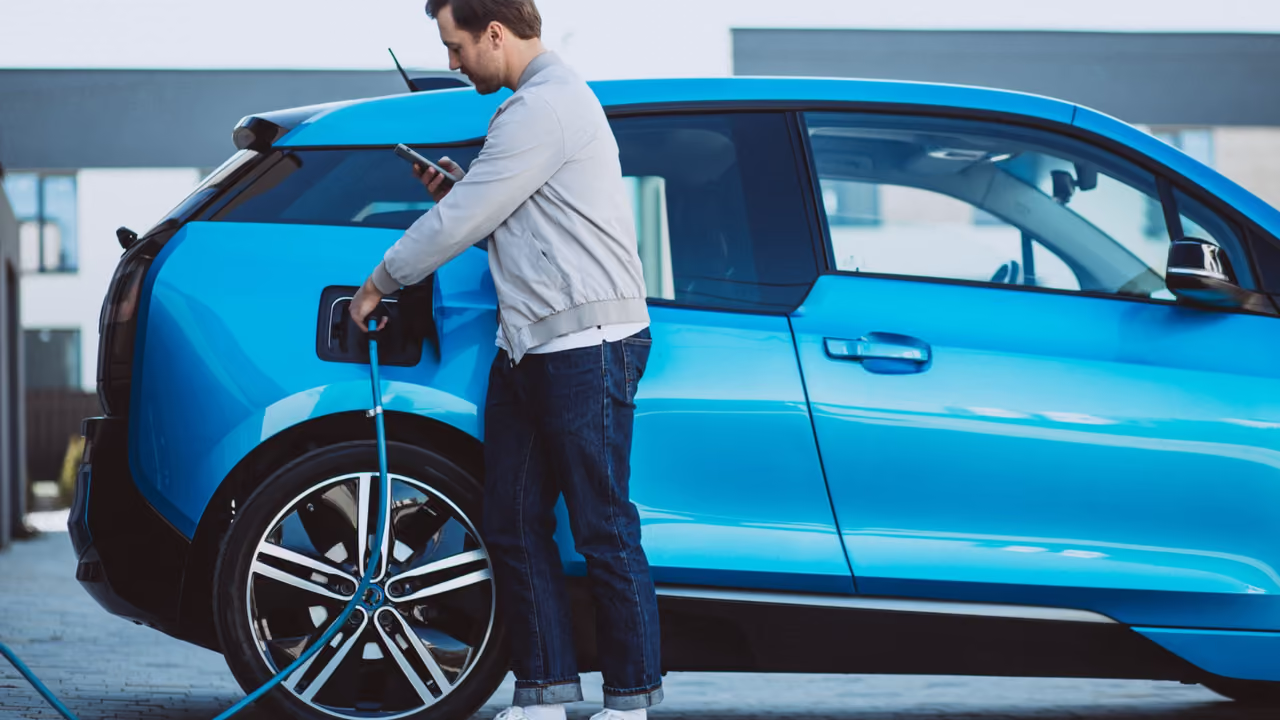
Electric cars have dramatically reshaped the automotive landscape, but their evolution is far from over. While lithium-ion batteries have powered this revolution, their limitations have sparked a search for alternative energy storage technologies. The future of electric vehicles (EVs) might not hinge on batteries alone but on a blend of innovations that go beyond the conventional.
The Limits of Traditional Lithium-ion Batteries
For over a decade, lithium-ion batteries have been the backbone of electric vehicles. They offer a decent balance of energy density, weight, and cost, enabling electric cars to travel hundreds of miles on a single charge. However, the technology isn’t without its drawbacks.
- Energy Density Constraints: Lithium-ion batteries have a theoretical energy density limit that restricts how far an EV can go without increasing battery size and weight.
- Charging Times: Even with fast-charging tech, replenishing these batteries takes significantly longer than refueling a gasoline car.
- Degradation and Lifespan: Over time, lithium-ion batteries lose capacity, reducing the vehicle’s range and performance.
- Resource and Environmental Concerns: Mining lithium and cobalt raises ethical and environmental issues, complicating the sustainability narrative.
These limitations have pushed engineers and scientists to look for complementary or alternative energy storage methods that can address these challenges.
Innovations in Supercapacitors and Solid-State Batteries
Two promising technologies gaining traction are supercapacitors and solid-state batteries, each tackling different pain points of current EV powertrains.
Supercapacitors
Unlike batteries that store energy chemically, supercapacitors store energy electrostatically, allowing them to charge and discharge incredibly quickly. This characteristic can significantly reduce charging times and improve the efficiency of energy recovery during braking.
- Rapid Charging and Discharging: Supercapacitors can be charged in seconds and deliver bursts of power, which is ideal for acceleration and regenerative braking.
- Longevity: They can endure hundreds of thousands of charging cycles without significant degradation.
- Lower Energy Density: A major downside is their relatively low energy storage capacity compared to lithium-ion batteries, making them unsuitable as the sole energy source for long trips.
Automakers are exploring hybrid systems that combine batteries with supercapacitors to leverage the strengths of both.
Solid-State Batteries
Solid-state batteries replace the liquid electrolyte found in lithium-ion batteries with a solid one, which promises several key advantages:
- Higher Energy Density: They can pack more energy into the same space, potentially extending driving range significantly.
- Improved Safety: Solid electrolytes are less flammable and more stable, reducing the risk of fires.
- Faster Charging: Solid-state batteries can potentially handle quicker charging cycles without degrading.
Despite these benefits, solid-state tech is still in development and faces challenges like manufacturing complexity and cost. Companies like Toyota and QuantumScape are racing to bring viable solid-state batteries to market within the next few years.
The Role of Hydrogen Fuel Cells in Electric Vehicles
Hydrogen fuel cells offer a different approach to powering EVs by converting hydrogen gas into electricity, emitting only water vapor as a byproduct. This technology sidesteps many of the issues tied to batteries.
- Fast Refueling: Filling a hydrogen tank takes mere minutes, comparable to gasoline refueling.
- Lightweight Energy Storage: Hydrogen has a high energy per weight ratio, which can benefit heavy vehicles and long-haul transport.
- Range: Fuel cell vehicles can often travel farther than battery-only EVs before refueling.
However, hydrogen faces hurdles including:
- Infrastructure: Hydrogen refueling stations remain scarce, limiting practical use.
- Production Challenges: Most hydrogen is currently produced from natural gas, which undermines environmental benefits unless green hydrogen from renewable sources is scaled up.
- Storage and Safety: Storing and transporting hydrogen safely requires robust technologies and regulations.
Despite these challenges, fuel cell EVs have found niches in commercial fleets and public transportation where their quick refueling and range advantages shine.
Future Prospects Integrating Multiple Energy Storage Systems
Rather than betting on a single technology, the next generation of electric vehicles might blend multiple energy storage solutions to harness their complementary strengths. Combining batteries, supercapacitors, and fuel cells could create vehicles that are safer, more efficient, and more convenient.
For example, a car might use a solid-state battery for long-range energy storage, a supercapacitor for rapid bursts of power and regenerative braking, and a small fuel cell to extend range or provide auxiliary power. This hybrid approach can mitigate individual weaknesses:
- Extending Range: Fuel cells or advanced batteries provide the bulk of the driving distance.
- Enhancing Performance: Supercapacitors handle acceleration and energy recovery efficiently.
- Improving Durability: Distributing energy loads reduces stress and degradation on any single system.
Moreover, integrating smart energy management systems will be crucial in balancing these sources seamlessly. The automotive industry’s push toward modular and adaptable powertrains suggests that future EVs will be more customizable, catering to different driving needs and environments.